Dental
Teeth Whitening in Korea
Professional teeth whitening in Seoul removes stains using peroxide gels and LED or laser activation — completed in one visit with no downtime.
Quick Answer
- One visit completes the procedure in 60–90 minutes with no hospital stay required.
- Temporary sensitivity lasting 1–2 days is common; a short 'white diet' follows.
- Whitening does not change the color of crowns, veneers, or fillings.
At a Glance
| Procedure time | 60–90 minutes |
|---|---|
| Anesthesia | None required |
| Hospital stay | None — outpatient visit |
| Recommended stay in Korea | 1–2 days minimum |
| Recovery | No downtime; mild sensitivity 1–2 days |
Overview
Professional teeth whitening is a non-invasive cosmetic dental procedure that lightens the natural color of teeth using peroxide-based bleaching gels.
Korean dental clinics — especially in Seoul's Gangnam district — commonly offer light-activated or laser whitening systems, including Zoom and high-output LED platforms.
The procedure requires no anesthesia and is completed in a single clinic visit or, for deeper staining, across two sessions. Total chair time is typically 60–90 minutes.
One important boundary: whitening gels act only on natural tooth enamel and dentin. Crowns, veneers, porcelain inlays, and composite fillings retain their original manufactured color and will not respond to peroxide treatment. Patients with mixed restorations should discuss shade-matching with their dentist before proceeding.
Book the cleaning first
Many Seoul dental clinics include a professional cleaning in their whitening package. If yours does not, scheduling a cleaning 24–48 hours before whitening ensures the gel contacts clean enamel and improves consistency of results.
Am I a Candidate?
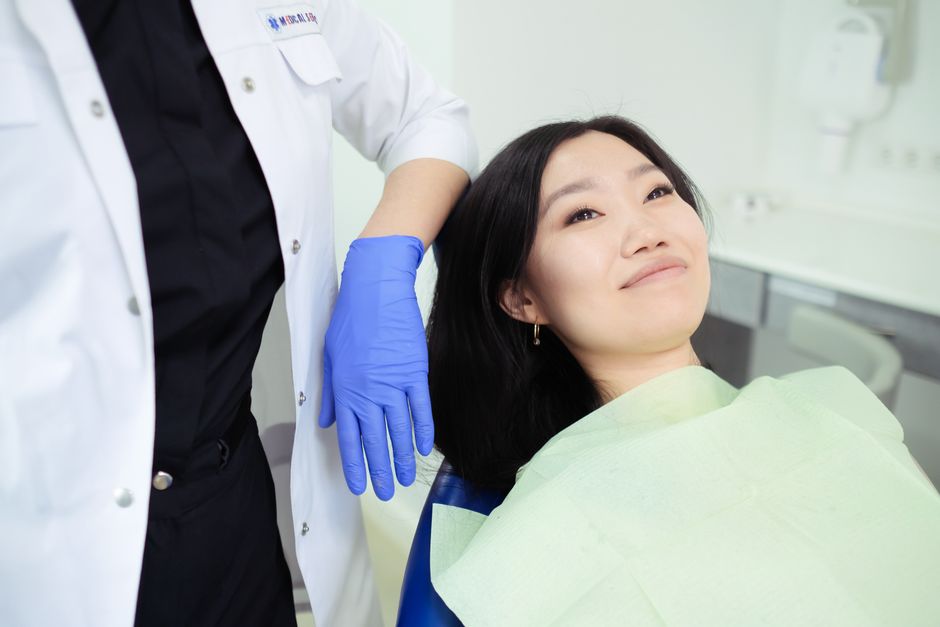
Most adults with healthy teeth and intact gums are suitable candidates.
Candidates who are not recommended for in-office whitening include:
- Pregnant or breastfeeding individuals
- Patients with untreated tooth decay or active gum disease
- Children and adolescents whose enamel is still developing
Existing restorations (crowns, veneers, fillings) will remain their original shade after treatment, which can create visible contrast if placed in the smile zone. A pre-treatment consultation helps identify this risk.
Deep internal (intrinsic) discoloration — such as staining from tetracycline antibiotics or dental fluorosis — may not respond adequately to standard peroxide whitening and may require alternative cosmetic approaches.
Your dentist will record your baseline shade before beginning.
How the Procedure Works
The session follows a structured sequence designed for safety and consistent results.
Step 1 — Examination and cleaning. The dentist performs a brief oral health check and professional cleaning to remove surface plaque and calculus. This ensures the whitening gel contacts enamel directly.
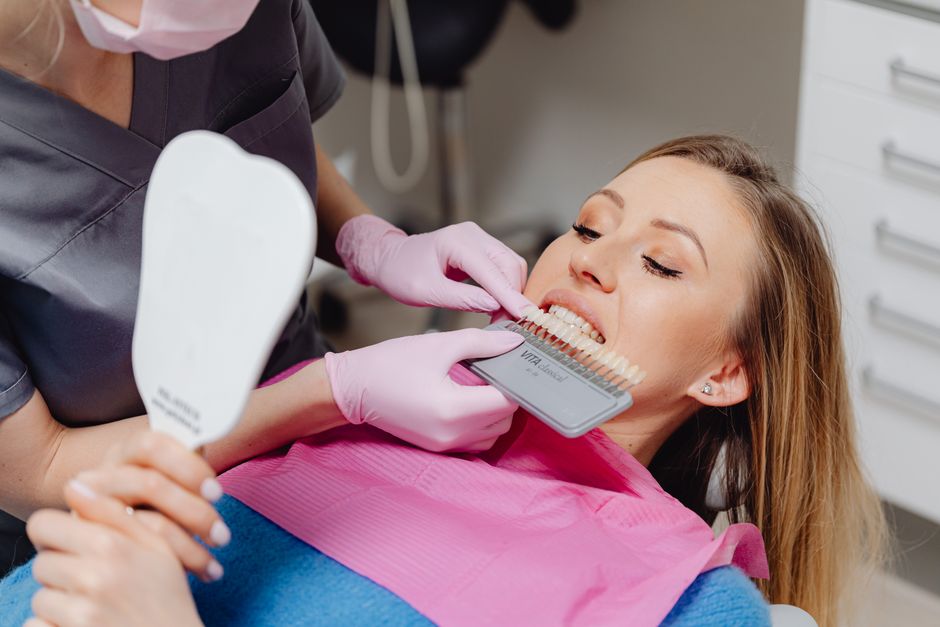
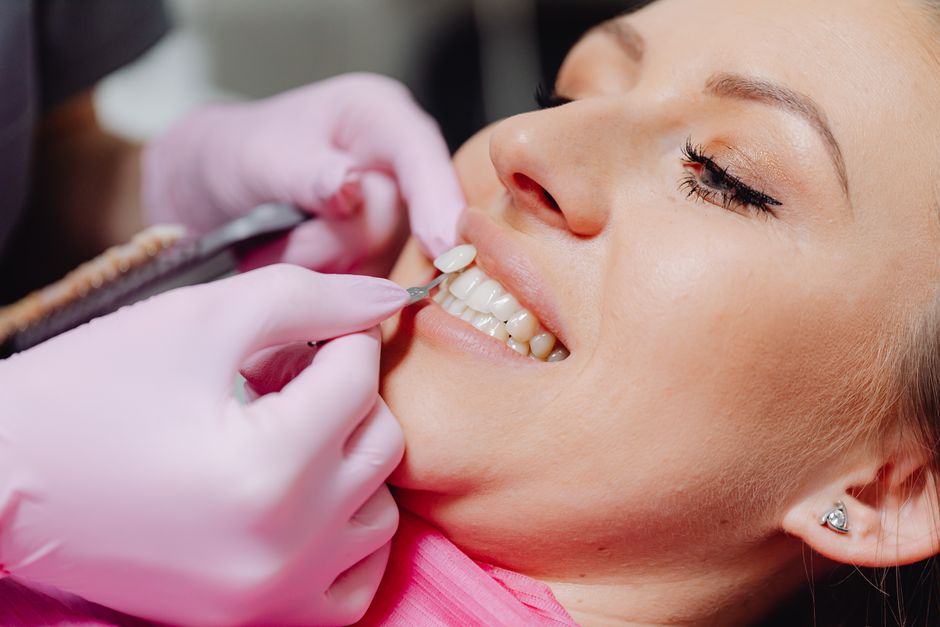
Step 2 — Shade recording. Your current tooth shade is documented using a standardized shade guide, providing a measurable before-and-after reference.
Step 3 — Soft tissue protection. A cheek retractor holds the lips back, and a gum shield or rubber dam is applied to isolate and protect the gum tissue from the bleaching agent.
Step 4 — Gel application. A professional-strength hydrogen peroxide or carbamide peroxide gel is carefully applied to the tooth surfaces.
Step 5 — Light or laser activation. An LED lamp or laser device activates the gel, accelerating the oxidation process that breaks down chromogen molecules within the enamel.
Step 6 — Cycles. The gel is applied in 2–3 cycles, each lasting around 15–20 minutes, with the gel refreshed between cycles.
Recovery Timeline
Teeth whitening requires no downtime. Patients leave the clinic immediately after treatment and resume normal activities the same day.
Tooth sensitivity is the most frequently reported post-treatment experience. It typically appears within a few hours of treatment and resolves within 1–2 days. Over-the-counter desensitizing toothpaste can ease discomfort during this window.
For the first 24–48 hours after treatment, clinicians recommend a 'white diet':
- Avoid coffee, tea, red wine, dark sodas, and deeply pigmented sauces
- Avoid tobacco products
- Favor white or light-colored foods (chicken, fish, rice, white pasta, dairy)
This short restriction period allows the enamel pores, which open slightly during bleaching, to remineralize and close.
Results are not permanent. Depending on diet and oral hygiene habits, whitening effects typically last from several months up to approximately two years before retreatment is considered.
Cost
Costs vary by hospital and case. Ask the hospital for a written, itemised estimate before you decide.
Why Korea
Seoul — and Gangnam in particular — hosts a high concentration of modern dental clinics with advanced equipment, English-speaking staff, and pricing that is competitive relative to comparable procedures in Western markets.
Korea's dental sector is regulated under national licensing standards, and facilities catering to international patients are often listed on the KHIDI Medical Korea platform (medicalkorea.or.kr), which provides a searchable registry of registered healthcare facilities.
For a procedure as brief as teeth whitening — one to two clinic visits, no recovery period — Korea is a practical destination for patients already traveling for longer dental or medical work, or for those combining the procedure with cosmetic dentistry (veneers, implants) planned across a short stay.
- Clinics in Gangnam frequently have dedicated international patient coordinators
- English-language consultations are widely available
- The compact geography of Seoul makes clinic access straightforward from central accommodations
Key Takeaways
- One clinic visit of 60–90 minutes is all that is needed — no hospital stay, no anesthesia, no recovery time.
- Whitening works only on natural tooth enamel — crowns, veneers, and fillings will not change color.
- A short 'white diet' for 1–2 days post-treatment protects results while enamel remineralizes.
Frequently Asked Questions
How long does a teeth whitening session take at a Seoul clinic?
Most in-clinic whitening sessions run 60–90 minutes from start to finish, including the pre-treatment preparation, 2–3 gel cycles with LED or laser activation, and final shade assessment. No additional visits are typically needed for standard cases.
Will my teeth hurt after whitening?
Temporary tooth sensitivity is a common post-treatment experience. It usually begins within a few hours of the procedure and resolves on its own within 1–2 days. Using a desensitizing toothpaste in the days after treatment can help manage discomfort.
Can teeth whitening change the color of my crowns or veneers?
No. Peroxide-based whitening gels work only on natural tooth enamel and dentin. Crowns, porcelain veneers, composite fillings, and other restorations will remain their original manufactured shade. If you have restorations in your smile zone, discuss this with your dentist before treatment to avoid visible shade mismatches.
How much does teeth whitening cost in Korea?
Prices vary by the system used. Many clinics bundle the exam and cleaning into the package price.
How long do the results last?
Whitening results are not permanent. Depending on diet, oral hygiene, and lifestyle factors such as coffee or tea consumption and tobacco use, results typically last from several months up to approximately two years. Periodic touch-up treatments can maintain brightness over time.
What should I avoid eating after a whitening session?
For the first 24–48 hours after treatment, follow a 'white diet': avoid coffee, tea, red wine, dark sodas, soy sauce, and other deeply pigmented foods and drinks. Favor white or light-colored foods — chicken, fish, rice, dairy, and white pasta. Tobacco should also be avoided during this window.
Related Topics
Sources
Researching Care in Korea?
KmedTour is an information resource only. Contact hospitals directly, or find a hospital registered to treat foreign patients on the Medical Korea portal.
Quick Facts
Cost
Ask the hospital for a written estimate
Duration
1 days
Korean Hospitals
0+ Available
Hospitals offering Teeth Whitening
Medical Information Disclaimer
The information provided on this page about Teeth Whitening is for general educational and informational purposes only. It is not intended as, and should not be construed as, medical advice, diagnosis, or treatment recommendations.
Always seek the advice of a qualified healthcare professional regarding any medical condition or treatment. Never disregard professional medical advice or delay seeking it because of information found on this website. Individual treatment outcomes may vary. Costs shown are estimates and may differ based on individual circumstances.
KmedTour is an independent information platform. It is not a medical provider or a registered foreign patient attraction agency, and it does not book treatment, take payment for treatment, or receive per-patient fees from hospitals. Treatment is arranged and paid for directly between you and the hospital.