Orthopedic
Knee Replacement in Korea
Robotic-assisted total or partial knee replacement in KOIHA-accredited Korean hospitals, with physio from day one.
Quick Answer
- Total knee replacement resurfaces all three knee compartments; partial (unicompartmental) treats only the damaged section — your imaging determines which applies.
- Korean hospitals use robotic-assisted and computer-navigated alignment tools that plan bone preparation from a digital model of your joint.
- Physiotherapy starts within the first 24 hours of surgery; most patients walk short distances by day two with a walking frame.
At a Glance
| Procedure time | 1–2 hours |
|---|---|
| Anesthesia | General or spinal anesthesia with nerve block |
| Hospital stay | Approximately 14 days inpatient |
| Recommended stay in Korea | 14 days (flying clearance confirmed by surgeon before departure) |
| Recovery | Walking independently in weeks; full recovery several months with consistent home physiotherapy |
Overview
Knee replacement surgery removes damaged cartilage and bone surfaces from the knee joint and replaces them with metal components and high-grade medical plastic (polyethylene) implants designed to restore smooth movement and relieve pain.
The procedure addresses osteoarthritis, rheumatoid arthritis, and post-traumatic joint damage that has not responded to conservative treatment.
Total knee replacement reshapes all three compartments — the medial, lateral, and patellofemoral — and replaces each surface. Partial (unicompartmental) knee replacement targets only the worn compartment, preserving healthy bone and tissue elsewhere.
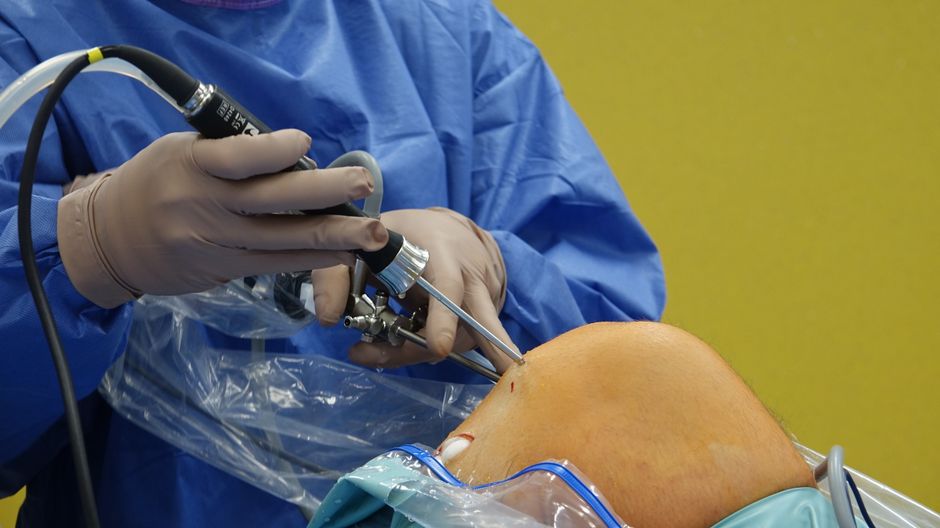
Korean hospitals participating in KOIHA accreditation and KHIDI (Korea Health Industry Development Institute) programmes use robotic-assisted and computer-navigated alignment systems to plan and guide bone preparation with sub-millimetre accuracy.
Rehabilitation begins within the first day of surgery. Ask the hospital whether its surgical team can review your X-rays and MRI scans before you book flights.
Send your imaging before you fly
Ask the hospital whether its surgical team can review your X-rays and MRI scans before you book flights. This confirms candidacy and allows the team to pre-select implant sizing, reducing delays after arrival.
Flying after major joint surgery
Long-haul flights carry an elevated deep vein thrombosis risk in the weeks after knee replacement. Flying clearance is given by your surgeon at the end of the recommended 14-day stay — not on a fixed-date basis. Travel with prescribed blood-thinning medication, compression stockings, and written instructions for in-flight movement.
Bring your implant record home
Before discharge, ask the hospital for a full implant record including make, model, and lot number. Your home physiotherapist and family doctor need this for safe ongoing care and any future imaging interpretation.
Am I a Candidate?
The typical candidate has moderate-to-severe knee arthritis producing daily pain, stiffness, or instability that has not responded adequately to medication, corticosteroid or hyaluronic acid injections, weight management, or structured physiotherapy.
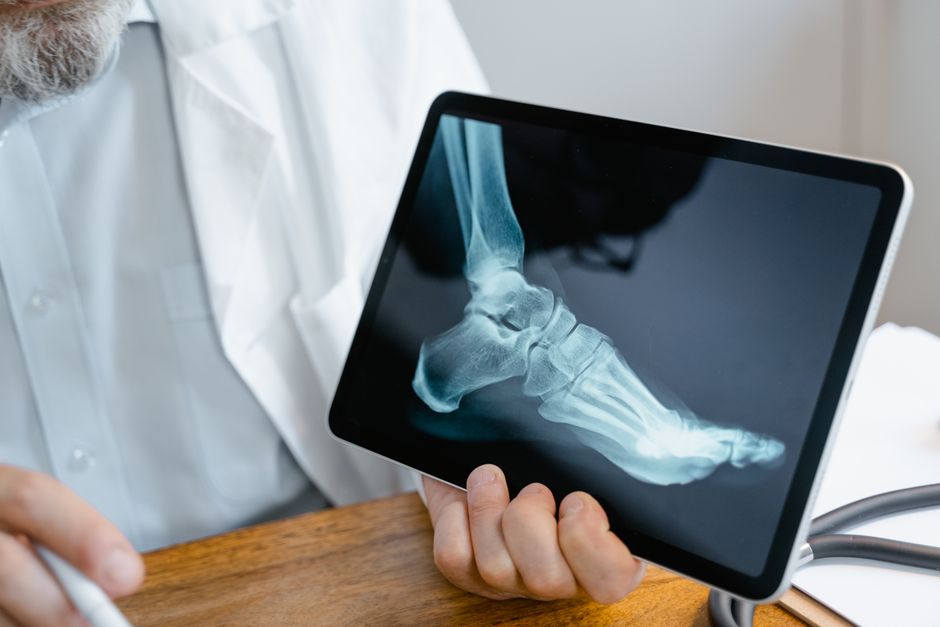
Imaging — weight-bearing X-rays and sometimes MRI — must confirm significant cartilage loss or bone-on-bone changes that explain the functional limitation.
Partial knee replacement is appropriate when damage is confined to a single compartment and the knee's main ligaments remain intact and functional.
Pre-surgical health review covers cardiovascular and pulmonary fitness, diabetes control, and blood-clotting history. Surgery may be deferred in cases of active joint or systemic infection, severely compromised bone quality, or unstable medical conditions.
Smoking and uncontrolled blood sugar are known risk factors for slower wound healing and higher infection rates; your care team will advise on optimising these before your travel date.
Ask the hospital whether its surgical team can assess your imaging before you travel; this can reduce uncertainty on arrival.
How the Procedure Works
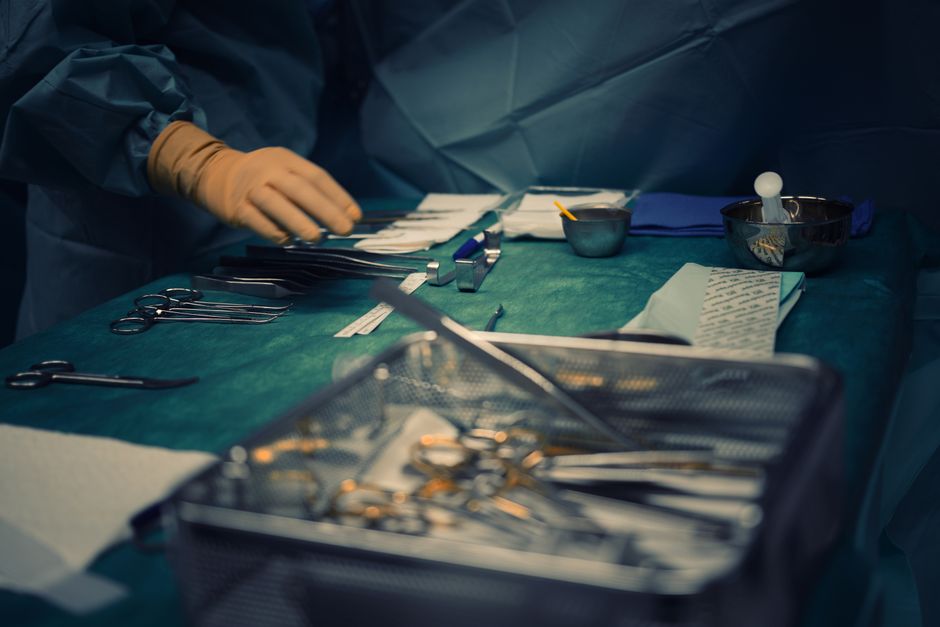
The operation is performed under general anaesthesia or spinal anaesthesia combined with a targeted nerve block for post-operative pain control.
Total knee replacement steps:
- Worn ends of the femur (thigh bone) and tibia (shin bone) are precisely reshaped according to the pre-planned digital template.
- A metal femoral component is fitted over the reshaped femur end.
- A metal tibial tray is fixed to the prepared tibia surface.
- A high-grade polyethylene spacer is placed between the two metal surfaces to allow smooth, low-friction movement.
- The kneecap (patella) is assessed and may be resurfaced with a plastic button if worn.
Partial knee replacement follows the same principles but only the single damaged compartment is resurfaced, leaving healthy areas of the joint untouched.
Robotic-assisted alignment: The surgeon works from a digital model of the patient's specific anatomy. The robotic or computer-navigation system guides bone preparation in real time, helping to achieve precise implant positioning and limb alignment.
Most implants are fixed with bone cement. Soft tissues around the joint are carefully balanced to ensure smooth, stable movement through a full range of motion. Total operative time is typically one to two hours. Physiotherapy begins within the first day after surgery.
Recovery Timeline
Day 1–2: The physiotherapist visits in the hospital room. You will stand and take guided steps with a walking frame. Early movement is intentional — it reduces blood clot risk and begins restoring joint range of motion.
Week 1: The care team monitors the wound, manages swelling with elevation and ice, and progressively increases walking distance. Stair practice begins when the team judges it safe.
End of week 2: Sutures or skin clips are checked and usually removed. The surgeon reviews your wound and functional progress before confirming flying clearance. Longer international flights carry an elevated blood clot (deep vein thrombosis) risk after major joint surgery, so this sign-off is taken seriously.
Travel preparation: Ask the hospital for compression stockings, written guidance on in-flight ankle exercises, hydration advice, and any blood-thinning medication your surgeon prescribes before you fly.
Discharge documents: You will receive a written rehabilitation plan, operative summary, and full implant details — make, model, and lot number — for your home physiotherapist and family doctor.
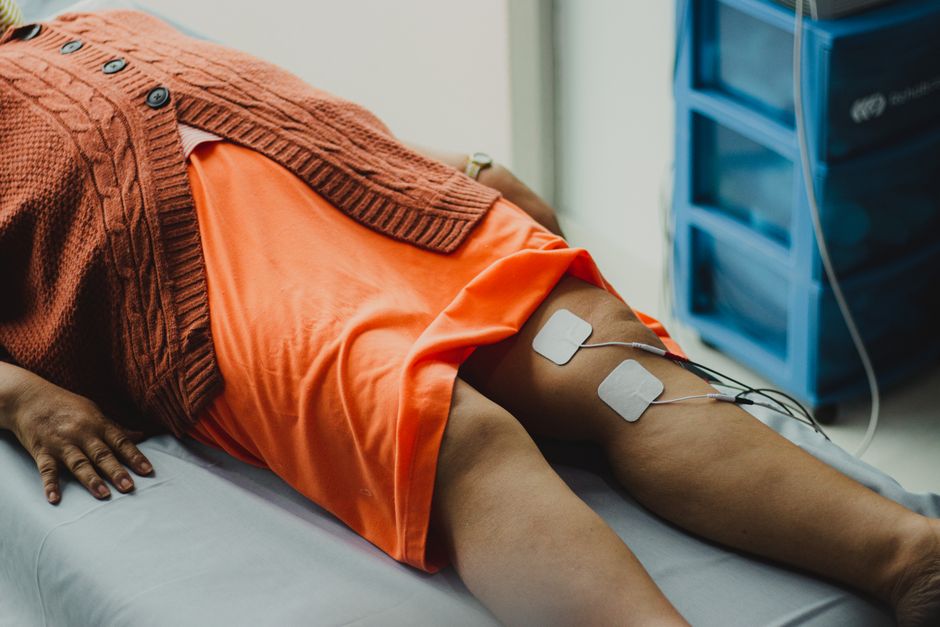
Home recovery: Ongoing physiotherapy continues for several months. Most patients walk without aids in weeks; returning to normal daily activities takes longer and depends on individual healing and consistent rehabilitation.
Cost
Costs vary by hospital and case. Ask the hospital for a written, itemised estimate before you decide.
Why Korea
Korea's orthopaedic surgery sector operates under Ministry of Health and Welfare regulation, with leading hospitals holding KOIHA (Korea International Healthcare Accreditation) certification and supported by KHIDI's international patient frameworks.
Major Korean orthopaedic centres offer robotic-assisted and computer-navigated joint replacement as a standard option — not a rare premium service.
Physiotherapy is integrated into the inpatient stay from day one, reflecting a clinical culture that treats post-operative mobilisation as part of the surgical outcome rather than a separate concern.
International patient departments at leading hospitals provide dedicated interpreter services and structured admission and discharge planning.
Ask the hospital whether it offers a pre-arrival review of your imaging, interpreter presence at key consultations, and a written discharge pack for your home clinical team.
Key Takeaways
- Robotic-assisted alignment is a standard offering at major KOIHA-accredited Korean orthopaedic hospitals, not a rare premium service.
- Physiotherapy begins within 24 hours of surgery — early mobilisation is a deliberate clinical protocol, not optional.
- Flying clearance is given individually by the surgeon after wound and functional review, typically at the end of the 14-day inpatient stay.
- Ask the hospital whether its surgical team can assess your imaging before you travel; this can reduce uncertainty on arrival.
Frequently Asked Questions
What is the difference between total and partial knee replacement, and how will I know which I need?
Total knee replacement resurfaces all three compartments of the knee joint — the inner (medial), outer (lateral), and kneecap (patellofemoral) surfaces. Partial (unicompartmental) replacement treats only the compartment that is damaged, leaving healthy cartilage and bone untouched elsewhere. The decision is based on your weight-bearing X-rays and MRI results. Ask the hospital whether its surgical team can review your X-rays and MRI scans before you book flights.
Is it safe to fly home after knee replacement surgery?
Major joint surgery temporarily increases the risk of deep vein thrombosis (DVT) — blood clots that can form in the leg veins during long periods of immobility, such as a long-haul flight. Flying clearance is given individually by your surgeon, typically at the end of the recommended 14-day inpatient stay, after reviewing wound healing and functional progress. Travel precautions include prescribed blood-thinning medication, compression stockings, regular in-flight ankle exercises, and adequate hydration. Ask the hospital for a written, staged rehabilitation plan and operative summary to give to your physiotherapist or doctor at home, so care continues without gaps.
What does the rehabilitation plan look like after I return home?
Ask the hospital for a written, staged rehabilitation plan and operative summary to give to your physiotherapist or doctor at home, so care continues without gaps. The home program typically runs several months, focusing on restoring range of motion, building muscle strength around the new joint, and progressing from aided to unaided walking. Most patients walk without a frame within weeks, but full recovery, including extended walking or stair climbing, takes longer and depends on consistent physiotherapy.
What does the estimated cost include, and what is not covered?
It does not include international flights, accommodation outside the hospital, meals not provided on the ward, or extended outpatient rehabilitation after returning home. Bilateral (both knees) surgery is quoted separately and at a higher cost.
How does robotic-assisted alignment improve the surgery?
Robotic-assisted and computer-navigated systems allow the surgeon to plan bone preparation from a digital model of the patient's specific anatomy before the operation begins. During surgery, the system guides the cutting instruments in real time, helping to achieve precise implant positioning and correct limb alignment. Accurate alignment is associated with more natural movement mechanics and longer implant function. At KOIHA-accredited Korean orthopaedic hospitals, robotic-assisted alignment is offered as a standard option rather than a rare specialist service.
What health conditions might delay or prevent surgery?
Active joint infection or systemic infection must be treated and resolved before surgery can proceed. Severely compromised bone quality (for example, advanced osteoporosis) may affect implant fixation and will be assessed by the surgical team. Unstable cardiovascular or metabolic conditions require optimisation before anaesthesia is safe. Uncontrolled blood sugar and active smoking are associated with slower wound healing and higher infection rates — the team will advise on managing these before your scheduled date.
Related Topics
Sources
- NIH National Institute of Arthritis and Musculoskeletal and Skin Diseases — Knee Replacement
- PubMed — Unicompartmental vs total knee arthroplasty: systematic review
- PubMed — Robotic-assisted total knee arthroplasty: clinical outcomes review
- Korea Health Industry Development Institute (KHIDI) — Medical Korea Statistics
- Medical Korea — Official International Patient Portal
- WHO — Deep vein thrombosis and air travel
Researching Care in Korea?
KmedTour is an information resource only. Contact hospitals directly, or find a hospital registered to treat foreign patients on the Medical Korea portal.
Quick Facts
Cost
Ask the hospital for a written estimate
Duration
14 days
Korean Hospitals
6+ Available
Hospitals offering Knee Replacement
Busan Adventist Hospital
Busan
View Details →
Busan ST. Mary's Hospital
Busan
View Details →
Donghoon Advanced Lengthening Reconstruction Institute
Gyeonggi-do
View Details →
Cheonan Chungmu Hospital
Chungcheongnam-do
View Details →
Design Hospital
Jeollabuk-do
View Details →
Available Cities
Medical Information Disclaimer
The information provided on this page about Knee Replacement is for general educational and informational purposes only. It is not intended as, and should not be construed as, medical advice, diagnosis, or treatment recommendations.
Always seek the advice of a qualified healthcare professional regarding any medical condition or treatment. Never disregard professional medical advice or delay seeking it because of information found on this website. Individual treatment outcomes may vary. Costs shown are estimates and may differ based on individual circumstances.
KmedTour is an independent information platform. It is not a medical provider or a registered foreign patient attraction agency, and it does not book treatment, take payment for treatment, or receive per-patient fees from hospitals. Treatment is arranged and paid for directly between you and the hospital.