Dentistry
Periodontal Treatment in Korea
Care for gum disease, cleaning below the gumline and sometimes operating to treat infection around the roots of teeth.
Quick Answer
- Korea offers the full spectrum: scaling and root planing, MFDS-regulated laser therapy, flap surgery, bone grafts, and the Pinhole Surgical Technique.
- Seoul's Gangnam district concentrates board-certified periodontists trained under the Ministry of Health and Welfare's specialty curriculum, active since 1967.
- Most non-surgical cases need only 1–3 visits over 1–2 weeks, making Korea practical for medical tourists.
At a Glance
| Procedure time | 30 min (cleaning) to 2–3 hours (surgical cases) |
|---|---|
| Anesthesia | Local anesthesia; sedation available at many clinics |
| Hospital stay | Outpatient — same-day discharge |
| Recommended stay in Korea | 7–14 days (non-surgical); 14–21 days (surgical or multi-quadrant) |
| Recovery | Mild soreness 2–5 days (non-surgical); 1–3 weeks for flap surgery or grafts |
Overview
Periodontal disease — commonly called gum disease — ranges from early-stage gingivitis to advanced periodontitis that destroys the bone supporting your teeth.
Left untreated, it is the leading cause of adult tooth loss worldwide and is linked to systemic conditions including cardiovascular disease and diabetes.
Treatment in South Korea follows the same evidence-based protocols used internationally: remove bacterial deposits, eliminate infection, restore gum health, and where necessary, rebuild lost bone or tissue.
Korean periodontists complete a Ministry of Health and Welfare-recognised specialty curriculum — one of eleven dental specialties formally recognised by the government — meaning practitioners operate under a structured, regulated training framework.
The Ministry of Food and Drug Safety (MFDS) regulates dental laser devices as medical equipment, so clinics using laser periodontal therapy operate with government-vetted instruments, not unclassified consumer tools.
Korea's national health infrastructure also means dental clinics — even those catering primarily to international patients — must meet mandatory registration and malpractice liability requirements set and monitored by the government.
Book a pre-trip consultation first
Many Seoul periodontal clinics offer remote consultations via email or video — send your most recent X-rays and a brief symptom description before booking flights. A written treatment plan and itemised estimate lets you compare costs accurately and ensures your stay is the right length for your case.
Am I a Candidate?
You are likely a good candidate for periodontal treatment in Korea if any of the following apply:
- Gums that bleed during brushing or flossing
- Persistent bad breath not explained by diet
- Gum recession exposing tooth roots
- Loose or shifting teeth
- Deep periodontal pockets (typically 4 mm or greater, confirmed by probing)
- A diagnosis of Stage I–IV periodontitis from your home dentist, with a treatment estimate you find cost-prohibitive
- Need for bone or soft-tissue grafting prior to implant placement
Non-surgical candidates (scaling and root planing, laser therapy) can often complete treatment in a single trip of one to two weeks.
Surgical candidates — those needing flap surgery, osseous surgery, bone grafts, or soft-tissue grafts — should plan for two to three weeks in Korea to allow adequate healing and a follow-up appointment before departure.
Patients who smoke should inform their periodontist during the consultation, as smoking significantly impairs healing and may alter the treatment plan.
Systemic conditions such as diabetes, blood-thinning medications, or immune-suppressing therapies must be disclosed at consultation; most Korean clinics request a short medical history form before treatment begins.
How the Procedure Works
Initial Examination and Periodontal Charting
The first appointment involves digital X-rays (often panoramic or periapical), probing of all gum pockets to measure depth, and an assessment of bone levels. Many Seoul clinics add 3D cone-beam CT imaging for surgical planning.
Scaling and Root Planing (SRP)
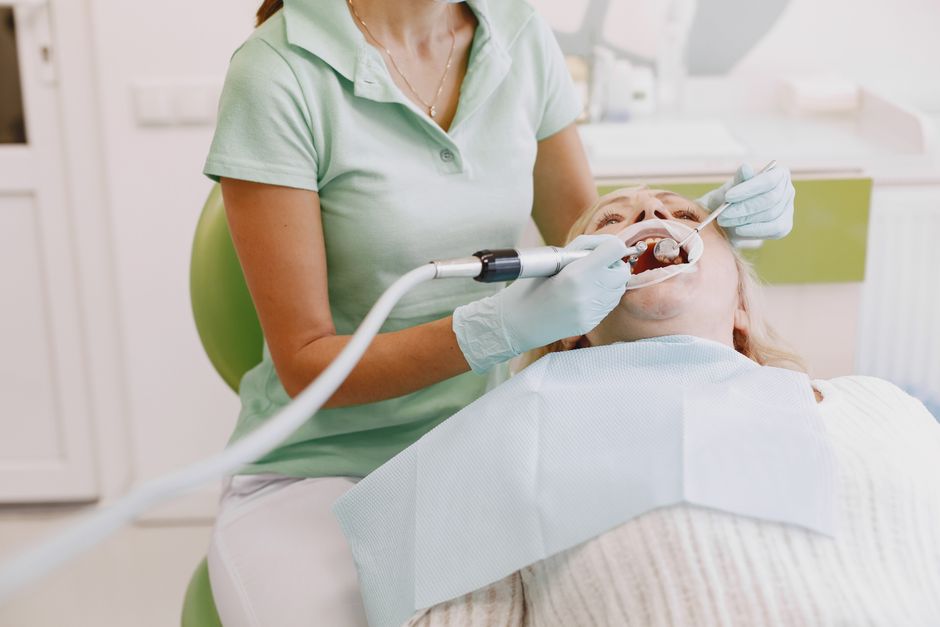
For mild to moderate periodontitis, SRP is the first-line treatment. An ultrasonic scaler breaks up calculus (tartar) above and below the gum line, and hand instruments smooth root surfaces to discourage bacterial reattachment.
Treatment is typically divided by quadrant or half-mouth per appointment, with local anesthesia for comfort. One to two sessions usually complete non-surgical deep cleaning.
Laser Periodontal Therapy
Many Korean clinics combine SRP with diode or Nd:YAG laser application. The laser removes diseased pocket tissue and reduces bacterial load without incisions or sutures, producing less post-procedure bleeding and discomfort than conventional surgery alone.
Laser devices used in Korean clinics must be registered and cleared by the MFDS, the national equivalent of the US FDA for medical devices.
Periodontal Flap Surgery (Open Flap Debridement)
For deep pockets that do not respond to SRP, the periodontist gently lifts the gum tissue, provides direct access to root surfaces and bone, thoroughly removes remaining calculus and infected tissue, and sutures the gum back. This allows cleaning of areas unreachable with closed instruments.
Osseous Surgery and Bone Grafting
When bone loss has created irregular craters around tooth roots, bone reshaping or grafting restores a more physiologically sound architecture. Graft material may be synthetic, processed cadaveric bone, or the patient's own bone harvested at the same appointment.
Soft-Tissue Grafts and the Pinhole Surgical Technique
For gum recession, connective tissue grafts — taken from the palate — rebuild lost gum volume. The Pinhole Surgical Technique is a minimally invasive alternative: a small puncture allows the periodontist to loosen and reposition existing gum tissue over exposed roots with no donor-site incision.
Recovery Timeline
Days 1–3 (Non-Surgical)
Expect mild soreness, some tooth sensitivity to temperature, and possible minor swelling. Avoid hot, spicy, very cold, or hard foods. Use any prescribed antimicrobial rinse as directed and avoid the treated area when brushing until advised otherwise.
Days 4–7 (Non-Surgical)
Most sensitivity resolves. You can resume gentle brushing and a near-normal diet. A follow-up appointment at around 4–6 weeks is ideal to re-probe pockets and assess healing, but international patients often receive a shorter check before departure.
Days 1–7 (Surgical)
Swelling peaks around day 2–3 and gradually subsides. Sutures are typically removed at 7–10 days. A soft diet is essential. Some bruising on the face or jaw is normal and resolves within a week.
Weeks 2–3 (Surgical)
Tissue healing is well underway. Eating becomes progressively easier. Avoid smoking and alcohol throughout this period, as both impair tissue repair significantly.
Weeks 4–8 (Surgical)
Bone grafts and soft-tissue grafts continue maturing beneath the surface. Full integration of grafted bone may take several months. Your home dentist can monitor healing with periodic X-rays and probing at 3-month intervals.
For all patients: periodontal disease is a chronic condition. Successful outcomes depend on regular maintenance (typically every 3–4 months in the first year) and thorough home care — a regime your Korean periodontist will review with you before discharge.
Cost
Costs vary by hospital and case. Ask the hospital for a written, itemised estimate before you decide.
Why Korea
South Korea has built one of Asia's most technically advanced dental sectors, driven by high domestic standards, competitive private practice culture, and sustained investment in dental technology.
Regulated Specialty Training
Periodontics has been a recognised dental specialty in Korea since 1967, when the Ministry of Health and Welfare formalised specialty curricula at dental colleges. This means board-certified periodontists in Korea have completed structured residency training, not simply self-designated as specialists.
MFDS-Regulated Technology
Dental laser systems — diode, Nd:YAG, Er:YAG — used for periodontal therapy in Korea require clearance from the Ministry of Food and Drug Safety before clinical use, the same regulatory pathway applied to pharmaceutical products and surgical devices. International patients benefit from the same oversight framework.
Medical Korea and KHIDI
The Medical Korea initiative, operated under government auspices and supported by the Korea Health Industry Development Institute (KHIDI), promotes and regulates inbound medical tourism. KHIDI introduced mandatory malpractice liability insurance covering both domestic and foreign patients, providing a level of recourse that many competing dental-tourism destinations cannot match.
Gangnam as a Clinical Hub
The Gangnam-gu district in Seoul has a high concentration of dental specialists, including periodontists with international patient experience, English-speaking coordinators, and multilingual case management. Digital workflows — 3D imaging, digital impressions, computer-guided treatment planning — are standard rather than premium add-ons at leading clinics.
Cost Without Compromise
Korea's cost advantage is structural, not a reflection of lower standards. Government price transparency requirements and a large, competitive dental market keep fees lower than in the US, UK, or Australia while the clinical environment, sterilisation standards, and materials quality remain comparable to those markets.
Key Takeaways
- Periodontal treatment in Korea covers the full range from non-surgical scaling to bone grafts, all under Ministry of Health and Welfare-regulated specialist frameworks.
- MFDS-regulated laser equipment and KHIDI's mandatory malpractice insurance provide government-backed patient protections.
- Periodontal disease is chronic — a Korean treatment trip addresses active disease, but long-term success requires maintenance visits with your home dentist every 3–4 months.
Frequently Asked Questions
Is periodontal treatment in Korea safe for international patients?
Yes. Dental clinics in Korea must meet mandatory government registration requirements, and periodontists practise under a formal specialty framework recognised by the Ministry of Health and Welfare since 1967. The Korea Health Industry Development Institute (KHIDI) introduced mandatory malpractice liability insurance covering foreign patients, which provides a recourse mechanism many other dental-tourism destinations lack.
How many trips to Korea do I need for periodontal treatment?
Non-surgical cases — scaling and root planing with or without laser therapy — are typically completable in one trip of 7–14 days. Surgical cases involving flap surgery, bone grafting, or soft-tissue grafting generally require 14–21 days to allow for suture removal and an initial healing check before you fly home. Your home dentist manages follow-up monitoring thereafter.
Will my home country dentist be able to continue my care after I return?
Yes. Korean periodontists routinely provide detailed discharge summaries, digital X-rays, and probing charts in a format your home dentist can use.
Does laser periodontal therapy replace surgery?
For mild to moderate periodontitis, laser therapy combined with scaling and root planing can achieve comparable outcomes to conventional surgery with less post-procedure discomfort and no sutures. For advanced cases with significant bone loss or deep pockets that do not respond to non-surgical cleaning, conventional flap surgery or grafting remains the more predictable approach. Your periodontist will recommend the appropriate protocol after probing and imaging.
Are the costs quoted in Korea the final price?
Reputable clinics in Seoul provide itemised written estimates after your initial examination and periodontal charting, before any treatment begins. The estimate should list each procedure by quadrant or site. Additional costs to account for include the initial consultation, any imaging not covered in the consultation fee, medications, and any follow-up appointments during your stay. Always confirm what is and is not included in writing.
Related Topics
Researching Care in Korea?
KmedTour is an information resource only. Contact hospitals directly, or find a hospital registered to treat foreign patients on the Medical Korea portal.
Quick Facts
Cost
Ask the hospital for a written estimate
Duration
7 days
Korean Hospitals
0+ Available
Hospitals offering Periodontal Treatment
Medical Information Disclaimer
The information provided on this page about Periodontal Treatment is for general educational and informational purposes only. It is not intended as, and should not be construed as, medical advice, diagnosis, or treatment recommendations.
Always seek the advice of a qualified healthcare professional regarding any medical condition or treatment. Never disregard professional medical advice or delay seeking it because of information found on this website. Individual treatment outcomes may vary. Costs shown are estimates and may differ based on individual circumstances.
KmedTour is an independent information platform. It is not a medical provider or a registered foreign patient attraction agency, and it does not book treatment, take payment for treatment, or receive per-patient fees from hospitals. Treatment is arranged and paid for directly between you and the hospital.